 If you have lost a glove , you would create this loving toy!

Thursday, February 9, 2012


Wednesday, February 8, 2012
Juana de Arco
Juana de Arco
She has brown hair, blue eyes, white skin, and plane nose. They have a valent expresion.
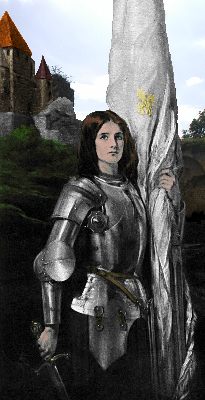
She has brown hair, blue eyes, white skin, and plane nose. They have a valent expresion.
leonardo da vinci
 Leonardo Da Vinci was very old.He had white beard,mustache and hair.He had brown eyes and big nose
Tuesday, February 7, 2012
AN EXAMPLE FOR ACTIVITY 3

Monday, February 6, 2012
Vicent Van Gogh


His eyes were small and blue, and his nose was big. He had no a ear, because one night Van Gogh cut it himself. His mouth was small, and his neck too. His face was very sharp.
In these self-portraits, he was in blue suit and in yellow jacket of an countryman, with a straw hat .
In these self-portraits, he was in blue suit and in yellow jacket of an countryman, with a straw hat .
Sunday, February 5, 2012
Describe features of any portrait

Giulia Farnese (1474 – 23 March 1524) was mistress to Pope Alexander VI. She was known asGiulia la bella, meaning "Julia the beautiful", in Italian. Lorenzo Pucci described her as "most lovely to behold". Cesare Borgia, son of Alexander VI, described her as having "dark colouring, black eyes, round face and a particular ardor"
A restoration of the painting in 1934-36 confirmed art historian Roberto Longhi's hypothesis that the work was by Raphael, and the removal of heavy repainting revealed the unicorn, traditionally a symbol of purity in medieval romance, in place of a Saint Catherine's wheel. Later restoration work on the painting in 1959 revealed the image of a dog, even earlier than the unicorn, also a symbol of chastity and conjugal fidelity
Lady with a unicorn, (Giulia Farnese) by Rafael di Sanzio(1505) A restoration of the painting in 1934-36 confirmed art historian Roberto Longhi's hypothesis that the work was by Raphael, and the removal of heavy repainting revealed the unicorn, traditionally a symbol of purity in medieval romance, in place of a Saint Catherine's wheel. Later restoration work on the painting in 1959 revealed the image of a dog, even earlier than the unicorn, also a symbol of chastity and conjugal fidelity

Describing physical appearance

Describing People
HEIGHT / WEIGHT
FACE / HAIR CLOTHES / 

Is she
• obese
• fat
• slightly overweight
• well-built
• heavily built
• of average build
• slightly built
• slim
• thin / skinny / bony ?
Is she
• tall
• of medium height
• shortish
• short / tiny ?
Is she
• curvy ?
(flat/small-breasted,
large-breasted)
Does she have
• thin waist
• big hips
• nice shapely legs
• firm belly muscles
• lovely figure ?
Is she
• pretty
• attractive
• lovely and charming
FACE / HAIR
Is she
• long-sighted/short-sighted ?
Is she wearing
• glasses / contact lenses
• smart clothes
• elegant clothes
• casual clothes
• shabby clothes
• jewellery ?
Does she have
• round / oval / square / heart shaped face
• bushy / thick / thin eyebrows
• round / almond / narrow / close-set eyes
• broad / flat / sharp / button / fake nose
• full / thin / well-defined lips
• broad smile / charming smile
• healthy / damaged teeth / (tooth) braces
• wrinkles / freckles / pimples / smooth skin
• moustache / beard ?

Does she have
• thick / rich / strong / healthy / shiny hair
• damaged hair / split ends
• thin hair / receding hair
• straight / wavy / curly hair
• spiky hair
• fringe
• permed hair
• coloured / dyed hair
• bleached hair / highlights
• pigtails / ponytail / braids / bun / dreads
• pull your hair back/put your hair up (with
a clip or an elastic band)
• long / short / shoulder-length
•
The Golden Number
The golden number is found in the design and
beauty of nature and also be used to achieve beauty and balance forming a good
proportion. The golden section is also called the divine proportion (generally
in the Renaissance period)

The golden
section was used by Leonardo da vinci. “The last supper” was based on the
golden section, golden rectangles are the most visually and they’re based on a
mathematical radio.

Candela Megido, Alexandra Brancovean, Aida Zapico
Saturday, January 28, 2012


Thursday, January 26, 2012
The divine proportion
El entierro del señor Orgaz, populary called El Entierro del conde Orgaz is a large painting painted by El Greco (1541-1614). Is and oil painting, done for parish of Santo Tomé, in Toledo, between 1586 and 1588. The painting is preserved in this place and is considered one of the best works of the author and is one of the most admired.
In this painting we can see that that the lower part of the painting is based on thedivine proportion, whereas the higher part is based the MysticPentagram and the pentagon which fits in it.

Iratxe and Lucía
El entierro del señor Orgaz, populary called El Entierro del conde Orgaz is a large painting painted by El Greco (1541-1614). Is and oil painting, done for parish of Santo Tomé, in Toledo, between 1586 and 1588. The painting is preserved in this place and is considered one of the best works of the author and is one of the most admired.
In this painting we can see that that the lower part of the painting is based on thedivine proportion, whereas the higher part is based the MysticPentagram and the pentagon which fits in it.

Iratxe and Lucía
Friday, January 20, 2012
The Golden Number
 Dalí painted in 1949 a painting called Leda atómica. It represent centuries of mathematics and symbolic tradition (especially Pythagoras ‘ideas). It is a drawing based on the golden number, but it is making in a way that is not easy to see. Looking the sketch which Dalí painting on 1947, we can observe that Dalí care about the geometric aspect. Besides, the painting is based in the Pythagoras’ pentagon.
Lucía and Iratxe
Thursday, January 19, 2012
The Golden Number

Iratxe and Lucía
The Golden Number
Goya worked on this painting for the Spanish monarchy, in Madrid from the year 1780 until 1783. This picture represents the Royal family, the Kings Charles IV and Maria Luisa are the key figures.
In this painting the symmetry is not present, despite the fact that at first see it may seem. The axis of the composition is the child of red (dressed as this color to stand out that role) and is aligned with the painting that is on its back. The proportion that Goya used makes the right side, with respect to the axis, smaller than the left side. This is due to the Golden Number that is a synonym for harmony.
To give dynamism to the scene, because as you can see in the image everything seems to be straight lines, we can look at studied line that create the heads and the position of the feet of the people in the painting.
Goya worked on this painting for the Spanish monarchy, in Madrid from the year 1780 until 1783. This picture represents the Royal family, the Kings Charles IV and Maria Luisa are the key figures.
In this painting the symmetry is not present, despite the fact that at first see it may seem. The axis of the composition is the child of red (dressed as this color to stand out that role) and is aligned with the painting that is on its back. The proportion that Goya used makes the right side, with respect to the axis, smaller than the left side. This is due to the Golden Number that is a synonym for harmony.
To give dynamism to the scene, because as you can see in the image everything seems to be straight lines, we can look at studied line that create the heads and the position of the feet of the people in the painting.


Monday, January 16, 2012


Sunday, January 15, 2012
DIVINE PROPORTION IN TORONTO
The CN Tower in Toronto, the tallest tower and freestanding structure in the world, has contains the golden ratio in its design. The ratio of observation deck at 342 meters to the total height of 553.33 is 0.618 or phi, the reciprocal of Phi!

MARÍA CARRACEDO DE VEGA Y PILAR SUAREZ 3ºB
DIVINE PROPORTION IN TAJ MAHAL
Renaissance artists of the 1500's in the time of Leonardo Da Vinci knew it as the Divine Proportion. In India, it was used in the construction of the Taj Mahal, which was completed in 1648.
 MARIA CARRACEDO Y PILAR SUAREZ 3ºB
PHI IN PYRAMIDES
Phi , the Golden Section, has been used by mankind for centuries in architecture
Its use started as early as with the Egyptians in the design of the pyramids. When the basic phi relationships are used to create a right triangle, it forms the dimensions of the great pyramids of Egypt, with the geometry shown below creating an angle of 51.83 degrees, the cosine of which is phi, or 0.618.
Its use started as early as with the Egyptians in the design of the pyramids. When the basic phi relationships are used to create a right triangle, it forms the dimensions of the great pyramids of Egypt, with the geometry shown below creating an angle of 51.83 degrees, the cosine of which is phi, or 0.618.
MARÍA CARRACEDO Y PILAR SUÁREZ 3ºB
Fibonacci's Rabbits
The original problem that Fibonacci investigated (in the year 1202) was about how fast rabbits could breed in ideal circumstances.

Suppose a newly-born pair of rabbits, one male, one female, are put in a field. Rabbits are able to mate at the age of one month so that at the end of its second month a female can produce another pair of rabbits. Suppose that our rabbits never die and that the female always produces one new pair (one male, one female) every month from the second month on. The puzzle that Fibonacci posed was...
How many pairs will there be in one year?
- At the end of the first month, they mate, but there is still one only 1 pair.
- At the end of the second month the female produces a new pair, so now there are 2 pairs of rabbits in the field.
- At the end of the third month, the original female produces a second pair, making 3 pairs in all in the field.
- At the end of the fourth month, the original female has produced yet another new pair, the female born two months ago produces her first pair also, making 5 pairs.

The number of pairs of rabbits in the field at the start of each month is 1, 1, 2, 3, 5, 8, 13, 21, 34, ...
Can you see how the series is formed and how it continues? If not, look at the answer!
The first 300 Fibonacci numbers are here and some questions for you to answer.
Now can you see why this is the answer to our Rabbits problem? If not, here's why.
Another view of the Rabbit's Family Tree:
Another view of the Rabbit's Family Tree:
  |
- All the rabbits born in the same month are of the same generation and are on the same level in the tree.
- The rabbits have been uniquely numbered so that in the same generation the new rabbits are numbered in the order of their parent's number. Thus 5, 6 and 7 are the children of 0, 1 and 2 respectively.
- The rabbits labelled with a Fibonacci number are the children of the original rabbit (0) at the top of the tree.
- There are a Fibonacci number of new rabbits in each generation, marked with a dot.
- There are a Fibonacci number of rabbits in total from the top down to any single generation.
Alexandra Brancovean, Candela Megido, Aida Zapico


Friday, January 13, 2012
The Golden Number in nature and architecture.
The Golden Number (also called Phi) is an important number. It is present in nature proportions such as in shells or in pine cones.

Greeks first used this number in buildings because they thought it was the beautiness number so, if the buildings proportions were based on Phi number, the construction would be beautyful as well. Buildings such as in the Partenon.

Since Greeks, Phi number became more used in other countrys in architecture (As in Eiffel thower) but also in paintings as in "A Venus Birth" or in "La Gioconda"
 EIFFEL TOWER

THE BIRTH OF A VENUS

LA GIOCONDA
ILLÁN RIESTRA NAVA 3ºA

Greeks first used this number in buildings because they thought it was the beautiness number so, if the buildings proportions were based on Phi number, the construction would be beautyful as well. Buildings such as in the Partenon.

Since Greeks, Phi number became more used in other countrys in architecture (As in Eiffel thower) but also in paintings as in "A Venus Birth" or in "La Gioconda"
 EIFFEL TOWER
THE BIRTH OF A VENUS

LA GIOCONDA
ILLÁN RIESTRA NAVA 3ºA
Subscribe to:
Comments (Atom)