Saturday, October 13, 2012

The Octopus

     The octopus is an animal caractherized by their eight arms. Ancient people of the mediterranean were aware of the octopus, as evidenced by certain artworks and designs of prehistory. Octopus were also depicted in the art of the Moche, who whorshipped the sea and its animals.  
Vase from a Mycenanean Greek cemetery at Prosymna.
Yearly Cycle of Power:  Summer, Fall
Time of Power: Night
Attributes: Disguise, Deception, Colour, Intelligence, Texture, Touch, Versatility, Wisdom

In Mitology.
     The Hawaiian  creation Myth relates that the present cosmos is only the last of a series, having arisen in stages from the wreck of the previous universe. In this account, the octopus is the lone survivor of the previous, alien universe.
     In Pacific Mithology the Octopus, or Kupe, according to legend, a man named Kupe was fishing near his home on Raiatea when an octopus stole his fishhooks with its many arms. Enraged, Kupe jumped into his canoe and pursued the beast for 35 days. By that time he had covered 2,400 miles to the south-west and there he sighted an island larger than any he had ever seen before: North Island, New Zealand. He sailed back and invited his compatriots to follow him to the new found land. They did so and became the Maoris.

In Literature.
     The octopus has a significant role in Victor Hugo's book Travailleurs de la mer (Toilers of the sea).

Other forms:
     Years ago, the ancient sailors said that a huge animal lives under the sea, it has eight legs and a big mouth. The also said that this animal atacks the ships and eats his sailors. They called it Kraken.
Kraken.


 LINKS:
Tonmo.com
Spiricanada.com
Wikipedia - Kraken
Wikipedia - Octopus


Wednesday, October 10, 2012

Animals, animals, animals

If you need some reference with your work about icons, symbols and totem animals, here you can see a few drawings and the name of each animal.


Do you know these expressions ? That´s a list of animal idioms.


Idiom

From Wikipedia, the free encyclopedia


"An idiom (Latinidioma, "special property", f. Greekἰδίωμα – idiōma, "special feature, special phrasing",
f. Greekἴδιος – idios, "one’s own") is an expression consisting of a combination of words that has a figurative
 meaning. The figurative meaning is comprehended in regard to a common use of the expression that is separate
 from the literal meaning or definition of the words of which it is made.[1]
 Idioms are numerous and they occur frequently in all languages.
There are estimated to be at least 25,000 idiomatic expressions in the English language.[2]"


The history of the Windows logos

Microsoft Windows have been experienced a lot of changes in their logos. The first logo were done in 1985, exactly, in november. 
The first logo were 5 years. This first logo had 3 different versions: 1.0 - 2.0 and 2.03. The logo were formed by 4 asimetric parts. The drawing were blue. 


The second logo were very different, compared with the first. This try to send an idea of speed and dynamism. We can see 5 different colours: red, blue, yellow, green and black. This logo were designed in 1990, but in 1995, they company, changed.

In august 1995, Windows changed a little the logo. The included a sky, and they put Microsoft in white color, and they also included the year in which they designed the logo: 1995.


Three years later, Windows change the logo. Only a little. All the letters that were in the picture were black. The only detail is that they include the name of Microsoft.

When we went in to 21th century, Windows change another time the logo. This were more revolutionary. They put the logo in a window, with some other windows near them. Finally, they continue with same things: All the letters in black, with year. But the name of Microsoft disappear, like the sky.


The company also did an special edition.

One year later, Windows produce a new logo, which I think is the most beatiful. The include 3D images and the word "XP" which cames fro the complete word, eXPerience.


The next logo were called "Windows Vista" and they had two different pictures. The first, doesn´t have so much changes. They only have changes in second word: isn't bold. The second only have the pictu, not the words.

With the problems of Windows Vista, Microsoft put in the shops Windows 7. The only change are the words, the other things, are the same.


And the last of the Windows logos. Microsoft 8. They remember to the first. The blue is the predominant colour, and the letters in white colour.

Wednesday, October 3, 2012

The peacock


File:Pfau imponierend.jpg File:Pavo cristatus -Tierpark Hagenbeck, Hamburg, Germany -female-8a (1).jpg

This animal have been used for so many iconic represations, incluying being the national bird of India in 1963. In this country they represent in the art, mythology, poetry, folk-music and traditions. 

A story in the Uttara Ramayana describes the head of the Devas, Indra, who unable to defeat Ravana, sheltered under the wing of peacock and later blessed it with a "thousand eyes" and fearlessness from serpents. Another story has Indra who after being cursed with a thousand ulcers was transformed into a peacock with a thousand eyes. In Buddhist philosophy, the peacock represents wisdom. Peacock feathers are used in many rituals and ornamentation. Peacock motifs are widespread in Indian temple architecture, old coinage, textiles and continue to be used in many modern items of art and utility. In Greek mythology the origin of the peacocks plumage is explained in the tale of Hera and Argus. The main figure of the Kurdish religion Yezidism, Melek Taus, is most commonly depicted as a peacock. Peacock motifs are widely used even today such as in logo of the US NBC television network and the Sri Lankan Airlines.

The peacock is originary from the India, where Alejandro Magno catch it in there conquests in Babilonia, and where there also die. These animal extend into Persia and where the romans catch into Italia.


Tratan de identificar a un pavo real que atacó a un niño en un parque de Gijón


These birds were often kept in menageries and as ornaments in large gardens and estates. A reference in the Bible mentions a peacock owned by King Solomon. In medieval times, knights in Europe took a "Vow of the Peacock" and decorated their helmets with its plumes. Feathers were buried with Viking warriors and the flesh of the bird was said to cure snake venom and many other maladies. Numerous uses in Ayurveda have been documented. Peafowl were said to keep an area free of snakes. In 1526, the legal issue as to whether peacocks were wild or domestic fowl was thought sufficiently important for Cardinal Wolsey to summon all the English judges to give their opinion, which was that they are domestic fowl.

In Anglo-Indian usage of the 1850s, to peacock meant making visits to ladies and gentlemen in the morning. In the 1890s, the term "peacocking" in Australia referred to the practice of buying up the best pieces of land ("picking the eyes") so as to render the surrounding lands valueless. The English word "peacock" has come to be used to describe a man who is very proud or gives a lot of attention to his clothing.


The peacock where into the NBC logo. A TV channel in South America. A DJ have been also catch this animal to their company. Another, not so much knowing by the people, is a restaurant in Panmá called "Pavo real". Finally, an internacional conexion, called "Hafla" use the plumage of the peacock.

 
But this animal also attack. Two months ago, one peacock attacked a little boy in a park in Gijon. The boy were going to give him some bread and the animal gave a peck to the boy. 

By: Bruno Álvarez & Nel Suárez
Images: Google Images
Text: Wikipedia

Thursday, September 27, 2012

Totem animals: Symbols, brands and meanings


EXERCISE FOR STUDENTS OF 3rd. LEVEL
  1. You have to join each name with the appropiate image and definition.
  2. In pairs, choose one of them (It´s necessary not repeat the same animal)
  3. Look for more information abour the meaning of this symbolic animal. Search examples in Art, History, legends, etc
  4. You have to find logos, brands and icons where we can see the animal related to.
  5. Write a post with the information and add more images and drawings.

For learn more: http://artspilesenglish.blogspot.com.es/2011/11/symbols-on-line-encyclopedia-quite.html

Saturday, September 22, 2012

FIRST TASK, FIRST LEVEL


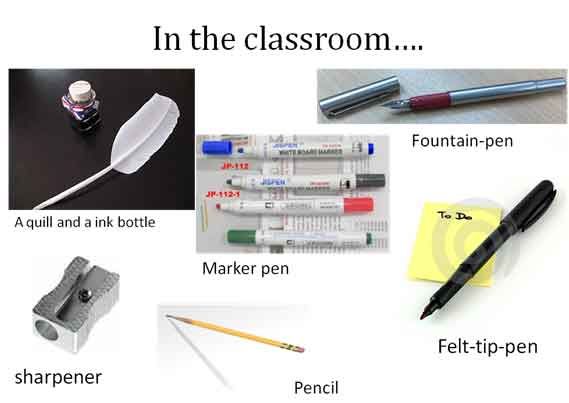
We are going to learn a few words about the main vocabulary of the subject.

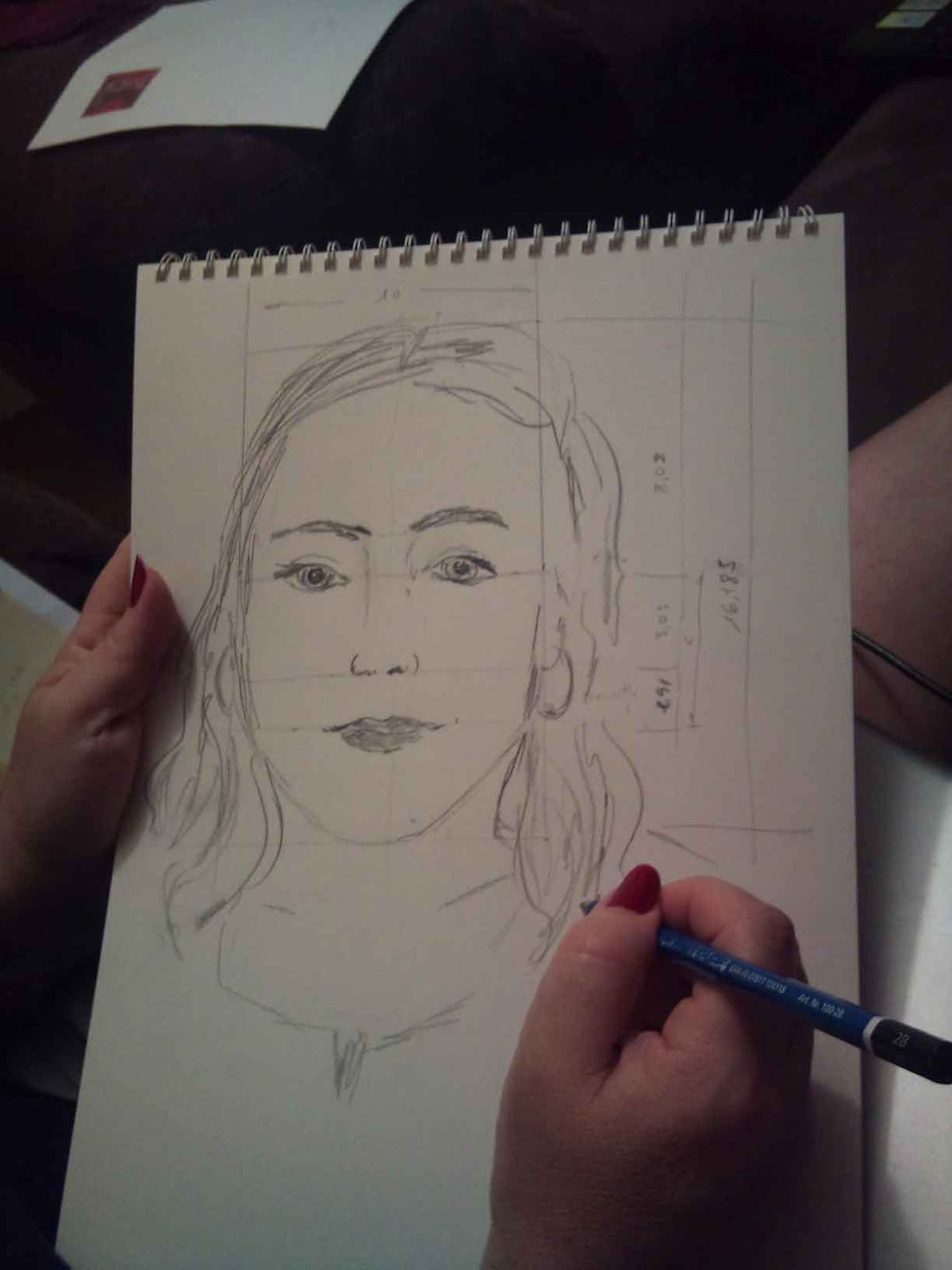
Next class, I will give you  an object related and a piece of paper to draw it. Write a  a post, a short sentence with the word in English  adding your  uploaded image.
For example:

I draw a portrait with soft pencils.


Racing flags


There is a tide in the affairs of men,
Which, taken at the flood, leads on to fortune. (Julius Caesar, 4.3.249-250) William Shakespeare

Come gather ’round people
Wherever you roam
And admit that the waters
Around you have grown
And accept it that soon
You’ll be drenched to the bone
If your time to you is worth savin’
Then you better start swimmin’ or you’ll sink like a stone
For the times they are a-changin’

Come writers and critics
Who prophesize with your pen
And keep your eyes wide
The chance won’t come again
And don’t speak too soon
For the wheel’s still in spin
And there’s no tellin’ who that it’s namin’
For the loser now will be later to win
For the times they are a-changin’

Come senators, congressmen
Please heed the call
Don’t stand in the doorway
Don’t block up the hall
For he that gets hurt
Will be he who has stalled
There’s a battle outside and it is ragin’
It’ll soon shake your windows and rattle your walls
For the times they are a-changin’

The line it is drawn
The curse it is cast
The slow one now
Will later be fast
As the present now
Will later be past
The order is rapidly fadin’
And the first one now will later be last
For the times they are a-changin’

Another version: Bruce Springsteen "The Times They Are A-Changin'" 1997

Welcome , students, to a new academic year in this Bilingual Project. I wish that activities can be exciting and challenging for you. Our "race" started a week ago and its necessary to give you  some ideas previously. Most races have some general instructions to runners in the minutes before the gun. 


  1. You will continually be asking yourself, "What am I doing here?" Be patient.
  2. You must know why your work is important
  3. The blog is a tool, it isn´t your "enemy". It´s  way to enrich your fluency in English writing and expression.
  4. You need practice writing. We all do.
  5. Pay attention to books and websites references. I won´t allow to use texts or images without mentioning author or where you extracted from.
  6. And finally, respect your fellows´posts. Criticism is good but your comments have to provide ideas and advices in a positive way.

Good luck, "Ready... set... go"?

Special thanks to Felix Martin for his unpayable help choosing the most appropiate music and lyrics .

Monday, August 6, 2012

Lucrezia Tornabuoni


This image  well-known as "Portrait of a young lady" represents in fact to a young Lucrezia painted by Piero del Pollaiolo (c. 1443 – 1496), also known as Piero Benci,
Lucrezia di Francesco Tornabuoni de Medici (1427 - 1482) was born, married and patroness to her home of Florence, Italy, during the early Renaissance (ca. 1450 - 1600).
"Still a teenager, Tornabuoni, whose family name was altered from the aristocratic Tornaquinci, married Piero I “The Gouty” (1416 - 1469) de Medici, heir to the banking family’s empire. Bringing blue blood into the Medici merchant-banking line, their marriage supported the Medici’s political ambitions.

The Republic of Florence

The city-state of Florence claimed a republican structure. Although voting rights were held by a limited number of qualified male citizens, Florentines were ruled primarily by their First Citizen with family factions vying for their place of power. As renowned Renaissance historians Christopher Hibbert and J.R. Hale have noted, the Medici maintained a delicate balance of relative peace, but maintained power through inheritance and exchange of influence.
Florence’s complex power balance provided no approved public positions for females, but a few women created their own indispensible roles. Despite severe legal limitations on women’s financial actions, Lucrezia wielded funds towards projects to the benefit of her family, keeping its citizens in a state of awe and gratitude."


Read more at Suite101: Lucrezia Tournabuoni de Medici, Pious Politician: The Power of Women's Patronage in Renaissance Florence, Italy | Suite101.com http://suite101.com/article/lucrezia-tournabuoni-de-medici-pious-politician-a161646#ixzz22lQZjBu3


A good number of pictures have been said over the years to be of Tornabuoni: the portrait, attributed to Domenico Ghirlandaio, is certainly her; the woman in the frescoes by Ghirlandaio is generally accepted to be her:
(a) A portrait done c.1475, when Tornabuoni was in her 40s.
(b) In a group of frescoes commissioned by Tornabuoni's brother shortly after her death, the woman second from the right in "Birth of St. John the Baptist"; at the left in "Birth of the Virgin"; and at the far right in "The Visitation." 
(c) Less generally accepted is the traditional identification of Tornabuoni as Mary in Botticelli's c.1480-81 "Madonna of the Magnificat."

Monday, July 30, 2012

Ghirlandaio: Portrait of young lady.

Domenico Ghirlandaio (Florence, 1448/49–1494) and workshop

Portrait of a Young Woman, ca. 1490–94
Tipo:

Tempera on panel, 44 x 32 cm
Medidas:
Lisboa, Museu Calouste Gulbenkian; inv. n. 282


Úbicacion:


© Museu Calouste Gulbenkian, Lisboa. Fotografía: Catarina Gomes Ferreira
For learn more about this artist and his work, visit he next page of Thyssen Museum: http://www.museothyssen.org/microsites/exposiciones/2010/Ghirlandaio/museo2_en.html

Domenico Ghirlandaio’s (Italian, Florentine 1449-1494) beautiful "Portrait of a Young Woman," circa 1485, shown above, for example, greets the viewer in the second room. The luminosity and freshness of the subject, dressed in a red Florentine gown and wearing a coral necklace, is handled with a realism and naturalism typical of the last quarter of the Fifteenth century; She is a forerunner of Leonardo Da Vinci’s and Verrocchio’s realistic and pensive, yet timeless and poignant women.

"Domenico Bigordi called Ghirlandaio ~ Biography 
1449 – January 11, 1494 Drawing portraits of the people who passed by his father’s goldsmith shop is how Ghirlandaio got his start as a young artist. Born Garrison di Tommaso Curradi di Doffo Bigordi, he got his name Ghirlandaio, which means garland-maker, from his father, who made well known garland-like jewelry that women adorned on their necks. Ghirlandaio had his first apprenticeship with the Florentine painter, Alesso Baldovinetti (1427 – 1499), and may have trained with Andrea del Verrocchio (1435 – 1488). While there is still some uncertainty about his young life, training and works, it is said that his first paintings were in Florence. These include Saint Jerome in His Study, a fresco done for the Chiesa di Ognissanti, or Church of Ognissanti, some of which he painted with his brothers, Benedetto and Davide, who worked in his studio. Much of Ghirlandaio’s work in the Ognissanti is accompanied by other frescos his contemporary Sandro Botticelli (1444 – 1510) did. The most acclaimed fresco in the Ognissanti is Ghirlandaio’s The Last Supper, a work said to influence Leonardo da Vinci. There is also Ghirlandaio’s fresco in the Ognissanti’s Vespucci Chapel, Madonna dell Misericordia, which shows her embracing the Vespucci family protectively. The young boy depicted under the Madonna’s right arm is said to be the young explorer, Amerigo Vespucci (1454 – 1512). Ghirlandaio’s painting style was bold and vivid, almost too much so for some critics of the time, as his colors seemed almost excessively bright. Though, his style was renowned for its decorative touch of grandeur and his natural sense of perspective and chiaroscuro (light and dark). This garnered his studio many commissions, including frescos in the Palazzo Vecchio (town hall of Florence) and The Sistine Chapel in Rome. In Tuscany he was commissioned for frescos in the Collegiata di San Gimignano and in Florence for the Sassetti Chapel of Santa Trinita, the Santa Maria Novella’s Ricci Family Chapel and for the Ospedale degli Innocenti. He had several prominent patrons, who he painted a number of portraits of; including the Medici family and the Tornabuoni family. His piece, Adoration of the Magi, from 1487 of the Giovanni Tornabuoni collection, has been at the Uffizi Gallery since 1790. His Stories from the Lives of Saints and Man of Sorrows, an altarpiece painted for the Santa Maria a Monticello is also at the Uffizi. This is only some of his documented work, and his frescos and altarpieces have and, in some cases, still do grace the walls of Italy’s churches. His most well known portrait piece is perhaps Old Man and his Grandson, which is now in the Louvre in Paris. His body of work had a lasting legacy in the Italian Renaissance, as well as being a teacher of Michelangelo (1475 – 1564), if only briefly. His son Ridolfo (1483 – 1561), also became a painter and was trained by Ghirlandaio’s brother Davide. "

Seattle Sketch with Watercolor

Saturday, July 28, 2012

Botticelli's La Bella Simonetta

Today´s muse, this young beauty charmed Florentine society. Although she died tragically young at age 22, her allure has been eternalized in the works of Botticelli, who preferred her face above all others. So goddesslike was she, the artist is even said to have modeled his Venus on her. In a final act of romance Botticelli also requested he be buried at her feet, forever to worship her. The very beautiful Simonetta Vespucci inspired the majority of Boticelli´s work.

Friday, July 27, 2012

Dante Alligheri and Beatrice Portiniari


Dante Alighieri (1265-1321) & Beatrice Portinari (1266-1290) 
Picture: Dante Gabriel Rossetti (1828-1882) 
Study for The Salutation of Beatrice (1849-1850)
Pen and ink and wash, 14" x 26", Fogg Art Museum, Cambridge, MA

Dante and Beatrice first met in Florence when he was nearly nine years old (1274) and she was just turned eight. She was dressed in soft crimson and wore a girdle about her waist. Dante fell in love with her at first sight and thought of her as angelic with divine and noble qualities. He frequented places where he could catch a glimpse of her, but she never spoke to him until nine years later. Then one afternoon (1283) he saw her dressed in white, walking down a street in Florence. Accompanied by two older women, Beatrice turned and greeted him. Her greeting filled him with such joy that he retreated to his room to think about her. Falling asleep, he had a dream that became the subject of the first sonnet in his La Vita Nuova, one of the world's greatest romantic poems. The above Rossetti print depicts scenes from La Vita Nuova III where Beatrice first greeted Dante, and Purgatorio XXX when Beatrice meets Dante in Eden “with a white veil and a wreath of olive (From http://www.wisdomportal.com/Romance/Dante-Beatrice.html)

Beatrice "Bicedi Folco Portinari (1266–1290)  was a Florentine woman known as the muse of the poetDante Alighieri. Beatrice was the principal inspiration for Dante's Vita Nuova, and also appears as his guide in the Divine Comedy (La Divina Commedia) in the last book, Paradiso, and in the last four canti of Purgatorio. There she takes over as guide from the Latin poetVirgil because, as a pagan, Virgil cannot enter Paradise and because, being the incarnation of beatific love, as her name implies, it is Beatrice Portinari who leads into the Beatific vision.
Scholars have long debated the identity of the historical Beatrice. She was apparently the daughter of the banker Folco Portinari, and was married to another banker, Simone dei Bardi. Dante claims to have met her only twice, each time separated by nine years but was so affected by the meetings that he carried his love for her throughout his life. (From Wikipedia, the free encyclopedia)

Thursday, July 26, 2012

Alessandro Allori and his universe of female portraits

If you wish to learn more about this painter, please, search the next link: you can wonder of the large number of different portraits atributted to Alessandro Allori.:http://bjws.blogspot.com.es/2010/10/portraits-by-alessandro-allori-1535.html.
The image is extracted from the same blog.
 Painting Associated with the Artist or the Worshop of Alessandro Allori (Italian Mannerist Painter, 1535-1607)  Portrait of a Woman 1560
WIKIPEDIA says:
"Alessandro di Cristofano di Lorenzo del Bronzino Allori (31 May 1535 – 22 September 1607) was an Italian portrait painter of the late Mannerist Florentine school.
Born in Florence, in 1540, after the death of his father, he was brought up and trained in art by a close friend, often referred to as his 'uncle', the mannerist painter Agnolo Bronzino, whose name he sometimes assumed in his pictures. In some ways, Allori is the last of the line of prominent Florentine painters, of generally undiluted Tuscan artistic heritage: Andrea del Sarto worked with Fra Bartolomeo (as well as Leonardo da Vinci), Pontormo briefly worked under Andrea, and trained Bronzino, who trained Allori. Subsequent generations in the city would be strongly influenced by the tide of Baroque styles pre-eminent in other parts of Italy."

Portrait of an Unknown Woman (La Belle Ferroniere)

Completion Date: c.1490
Place of Creation: Milan, Italy
Genre: portrait
Technique: oil
Material: panel
Dimensions: 63 x 45 cm
Gallery: Musée du Louvre, Paris, France
"La belle Ferronnière is also simply known as the Portrait Of An Unknown Woman. The painting's title, applied as early as the seventeenth century, identifying the sitter as the wife or daughter of an ironmonger (a ferronnier), was said to be discreetly alluding to a reputed mistress of Francis I of France, married to a certain Le Ferron. The tale is a romantic legend of revenge where the aggrieved husband intentionally infected himself with syphilis, which he passed to the king through his wife.
Although the model of the painting is still shrouded in mystery, the landmark exhibition "Leonardo Da Vinci: Painter at the Court of Milan" ( National Gallery of Art in London, 9 Nov 2011- 5 Feb 2012) listed the portrait as possibly depicting Beatrice d'Este, wife of Ludovico Sforza, Duke of Milan. This challenges the portrait's earlier attribution to Lucrezia Crivelli, a mistress of Ludovico. 
There are so many confusing references as to who this person was. I think they should just leave her be as the title suggests - Portrait Of  An Unknown Woman. " TEXT EXTRACTED FROM: http://jayagandi2010.blogspot.com.es/2012/05/portrait-of-unknown-woman.html

Tuesday, July 24, 2012

Today it begins a serial about "Ladies from Firenze in the Renaissance"

La Bella Principessa by Leonardo da Vinci By , About.com Guide http://arthistory.about.com/od/leonardo/ss/leonardo_la_bella_principessa.htm (brief summary)

"This little portrait made big news on October 13, 2009 when Leonardo experts attributed it to the Florentine Master based on forensic evidence.
Previously known as either Young Girl in Profile in Renaissance Dress or Profile of a Young Fiancée, and catalogued as "German School, early 19th Century," the mixed media on vellum drawing, backed with an oak panel, was sold at auction for $22K (US) in 1998, and resold for approximately the same amount in 2007. The buyer was Canadian collector Peter Silverman, who was himself acting on behalf of an anonymous Swiss collector. And then the real fun started because Silverman had bid on this drawing at the 1998 auction suspecting, even then, that it had been misattributed.

Technique

The original drawing was executed on vellum using pen and ink, and a combination of black, red and white chalks. The yellow color of the vellum lent itself well to creating skin tones, and combining with carefully applied black and red chalk for green and brown tones, respectively.

Why Is It Now Attributed to Leonardo?

Dr. Nicholas Turner, former Keeper of Prints & Drawings at the British Museum and an acquaintance of Silverman's, brought the drawing to the attention of leading Leonardo experts Drs. Martin Kemp and Carlo Pedretti, among others. The professors felt there was evidence that this was an uncatalogued Leonardo for the following reasons:
  • The age of the vellum.
  • Vellum, a type of parchment made from animal skin, can be carbon-dated. And dating the physical materials in a previously-unknown-but-maybe-it's-a-masterpiece work is the first step taken in an authentication. (It has to be; there is no point in continuing if "Renaissance" materials date to a later period.) In the case of La Bella Principessa, carbon-14 dating placed its vellum between 1450 and 1650. Leonardo lived from 1452 to 1519.
  • The artist was left-handed.
  • If you look at the larger view of the image above (click, and it will open in a new window), you'll see a series of light ink parallel hatching lines from the nose to the top of the forehead. Note the negative slope: \\\\. This is how a left-handed person draws. A right-handed person would have inked the lines thus: ////.
    Now, which other artist, during the Italian Renaissance, drew in the style of Leonardo and was left-handed? None are known.
  • The perspective is flawless.
  • Perspective being a forte of Leonardo's. He had been studying mathematics all of his life, after all.
  • The knots on the shoulder of the sitter's dress and the braiding in her headdress are executed with Leonardesque precision.
  • See above. Leonardo's particular mathematical passion was geometry. In fact, he would go on to become fast friends with Fra. Luca Pacioli (Italian, 1445-1517) and create drawings of Platonic Solids for the latter's De Divina Proportione (written in Milan; 1496-98, published in Venice, 1509). Just for curiosity's sake, feel free to compare the knots in La Bella Principessa tothis etching.
  • It is Tuscan in overall style, though finishing details are Milanese.
  • One of those finishing details is the sitter's hairstyle. Take a careful look at the pony tail (which actually rather resembles a polo pony's, after it has been gathered and taped in preparation for a match). This style was introduced to Milan by Beatrice d’Este (1475-1497), Ludovico Sforza's bride. Called a coazzone, it featured a bound braid (either real or false, as in a 15th-century hair extension) that ran down the center of the back. The coazzone was in fashion only a few years, and only at court. Whatever the Principessa's identity, she moved in the upper echelon of Milanese society.
  • Leonardo had been quizzing a traveling French artist about the use of colored chalk on vellum at the time.
  • It is important to point out here that no one used colored chalk on vellum during the early Renaissance, so this is a sticking point. Whoever created this drawing was conducting an experiment. Perhaps not on the scale of, say, painting a huge mural in tempera on a wall covered with pitch, mastic and gesso -- incidentally, also in Milan -- but, well. You can doubtless guess where this train of thought is going.
However, "new" Leonardos demand conclusive proof. To this end, the drawing was sent to the Lumiere Technology lab for advanced multispectral scanning. Lo, a fingerprint emerged that was "highly comparable" to a fingerprint on Leonardo's St Jerome (ca. 1481-82), notably executed at a time that the artist worked alone. A further partial palm print was later detected.
Neither of these prints were proof, though. Additionally, nearly everything listed above, save for the date of the vellum, is circumstantial evidence. The identity of the model remained unknown and, furthermore, this drawing was never listed in any inventory: not Milanese, not of Ludovico Sforza's, and not of Leonardo's."

"The young sitter is presently presumed by experts to be a member of the Sforza family, although neither the Sforza colors nor symbols are evident. Knowing this, and using the process of elimination, she is most likely Bianca Sforza (1482-1496; daughter of Ludovico Sforza, Duke of Milan [1452-1508], and his mistress Bernardina de Corradis). Bianca had been married by proxy in 1489 to a distant relative of her father's but, because she was seven years old at the time, remained in Milan until 1496.
Even if one were to assume that this portrait depicts Bianca at age seven -- which is doubtful -- the headdress and bound hair would be appropriate for a married female.
Her cousin Bianca Maria Sforza (1472-1510; daughter of Galeazzo Maria Sforza, Duke of Milan [1444-1476], and his second wife, Bona of Savoy) was previously considered as a possibility. Bianca Maria was older, legitimate and became Holy Roman Empress in 1494 as the second wife of Maximilian I. Be that as it may, a portrait of her by Ambrogio de Predis (Italian, Milanese, ca. 1455-1508) done in 1493 does not resemble the model for La Bella Principessa." 
(.....)