Saturday, April 21, 2012

BERTHE MORISOT.

                                    
                                                           BERTHE MORISOT


Berthe Morisot was born in Bourges, France. In 1841. She married with the Édouard Manet's brother.

She was an impressionist painter and she did many pictures and paints. Some paints went to the Paris Motor Show, because her paints were very beautiful. First, she painted outdoor, in many landscapes and beaches, but then she painted her sister, Edma.
Usually, Berthe painted scenes about ballet and skating on ice. She painted with complementary colours mainly, but not very striking. She usually used thick palette and thick lines.
Also, she used light colours for paint the sun and water of the sea. She painted the water of the sea with many shades of blue and green.


In the picture above, there is a woman. As we can see, the woman's skin is very pale because as I said before, the colours of the picture are not striking, so the rest of the body has natural colours and the tone isn't very bright and striking. The dress has a different tone of blue that normal, it is a dark blue, I think. The fan has many different colours: red, different tones of blue, white, yellow... In the background there are many flowers with different colours, tones... The texture of the image is very different than others impressionists.

                                                                                                         Pablo Redondo 1ºD

Links:  http://es.wikipedia.org/wiki/Berthe_Morisot  and http://www.museothyssen.org/microsites/exposiciones/2011/morisot/

Date: 21/4/2012. Saturday.

Richard Hamilton

Richard William Hamilton was a British painter and collage artist of the 20th Century. He is one of the most recognized Pop Art painter.
Hamilton was born in Pimlico (London), on February in 1922. Despite having left school with no formal qualifications, he managed to gain employment, where he discovered his ability for draughtsmanship. He starts studying in the Royal Academy but he was expelled later, so he needs to study in other schools.
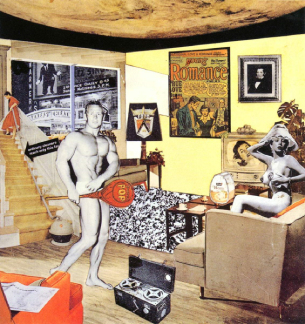
In 1952 he starts teaching industrial design and typography and founds the ICA of London. In 1956 he organizes an exposition in the Whitechapel Art Gallery. Here, he shows his famous collage: "What Is It That Makes Today's Homes So Different, So Appealing? "

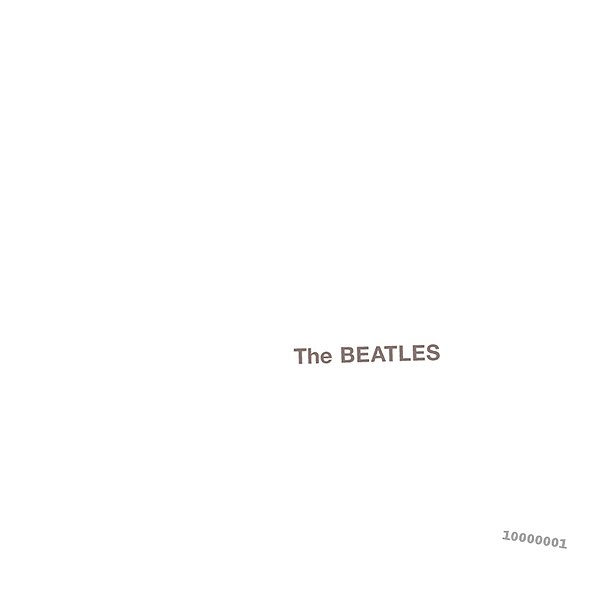
Other important work of this artist is The White Album, designed for Beatles.

In 2007 he obtains the Max Beckmann Prize. One year later, he gets the Praemium Imperiale.
He dies on September in 2011. 


Information extracted from: Wikipedia

Thursday, April 19, 2012

MARY CASSAT


Mary Stevenson Cassatt was an American painter and printmaker.
In the picture there are two children in the beach. The lighting is often the most important think in the Impressionism. The horizon is very high. There is a special attention to the chill of excitement and subtleties of female psychology. The colors are soft. She painted en plein air.
She was described by Gustave Geffroy in 1894 as one of "les trois grandes dames" of Impressionism alongside Marie Bracquemond and Berthe Morisot.


By Diego Fernández Artime & Miguel Cotrina.


EXTRACTED FROM:http://en.wikipedia.org/wiki/Mary_Cassatt

Paul Gauguin

Paul Gauguin was born on 7 of june 1848, it was a post-impresionist. He died in 9 of may 1903. When he went to Taithí, he created a new style of drawing, he called it cloisonnisme. 

With his new style, he used to paint with dark outlines, contrasting with pure colours. He liked to draw Taithí's women and tropical landscapes. He used pastels shapes.

Extracted by:
Wikipedia: http://en.wikipedia.org/wiki/Paul_Gauguin

MONET

Claude Monet.
Claude Monet was a famous impressionist painter. He was born on 14th Noverber 1840.
Paris: Here it's a picture by Claude Monet. There is a river with some boats. At the end of the picture there are some houses and a mountain. There is a woman at the front of the picture, she's under a tree. The woman is looking at the river. The woman is wearing a white dress and a white hat, the hat is in the ground near the woman.The sky is blue whitout clouds, it's a little picture. The picture was painted in 1868.
By: Alejandro Toyos and Diego Rodríguez

Claude Monet


We chose Monet, an impressionist artist. He was born in Paris, France, and he died in Giverny .
The impressionsm is a very important movement that ocours in 19th century. The "capital" of impressionism was France. The characteristics of impresionsm pictures are:
·Visible brush strokes
·open composititon
·Use the light
·Unusual painting.

The painting that we choose is Impression Sunrise (Impression soleil levant) because it is the most important painting of impressionism, because it gives the name to this movement.
In the picture we can see a sunrise, with many people fishing in boats.
Monet uses strong brush strokes, because you can see the marks of the brush, for example in the sky you can see many lines in yellow and in blue. He also use bright colours and very pure colours.
This paint is very intresting, because if you make a copy of it in black and white the sunrise disappear.

We stract this information of Wikipedia
http://en.wikipedia.org/wiki/Impression,_Sunrise
http://en.wikipedia.org/wiki/Impressionism

By Pablo Dávila & Sofía Cuesta

Wednesday, April 18, 2012

ABSTRACT ART. JACKSON POLLOCK

 JACKSON POLLOCK

 Paul Jackson Pollock was an american artist of the 20th century and one of the most influential painters in his movement, abstract expressionism.
 Pollock was born in Cody, Wyoming (USA) on January 28th in 1912. After his childhood in Cody, he went to New York, where he studied in the Art Students League. Soon, his work started being abstract and surreal. Between 1935 and 1943, Pollock worked for the WPA and painted under Picasso's influence. Besides, since 1938, he worked as well for the Federal Art Project. All this made Pollock meet and know many different styles, techniques (like air pump paint or airbrush) and materials (like varnish or synthetic enamel). Pollock married Lee Krasnernin 1945, who backed him to keep painting and to control his alcoholism. Since 1949, he was paid a monthly payment from Peggy Guggenheim, who became his patron. In 1956, when he had already got over his vices, Pollock died surprisingly in a terrible car accident, at the early age of 44.
 Pollock belongs to the abstract expressionism movement, where he was one of the most important artists. His paintings are characterized by some aspects:
 - Action painting: this technique consisted on laying the huge canvas on the floor and painting it as the artist walks and moves over the picture.
 - Dripping: this other technique was based on letting the paint drip over the picture. Pollock also used to launch the paint against the canvas.
 - All-over: Pollock never used to left any blank space in the picture and usually put one paint lay over another one.


 NUMBER 8

 This picture (exposed in the Neuberger Museum in New York) was painted in 1949, when Pollock was already married and had almost controlled his alcoholism. This picture is one of the first ones of his most remarkable years (1949-1953) and shows very well Pollock's style and techniques.
 "Number 8" doesn't show any image or even a feeling. In fact, it has no title which can describe the picture. As Pollock said, he doesn't want to show anything, it's only an action, a fact. This is one of the characteristics of many Pollock's paintings.
 The technique used in "Number 8" is oil, enamel and aluminium paint on canvas and, as many other Pollock's pictures, it has been painted by "action painting". It's very easy to observe that Pollock has applied the picture either by dripping or by launching it. Eventually, we can also appreciate that he has covered all the canvas surface and has overlaid the paint, creating that peculiar style.

 - Illan's opinion (negative): I do not like this painting. Pollock used to paint random and abstractly, but colours were selected: he tried to guess what colours might combine with the other colours. However, in this canvas there is not the bit of sense his pictures used to have. Even one characteristic of Pollock's movement (abstract expressionism) is missing. If this movement was based on abstract paintings that transmit a feeling or an idea, I don't think this canvas satisfies the second characteristic. I argue that this picture is one of the worst pictures ever drawn by him. The only thing that distinguish this picture from any other that anyone can make, is that this one has been painted by Pollock. 

 - Pelayo's opinion (possitive): I do like this abstract picture. Apart from the interesting techniques Pollock has used to paint it, I think it's also very intriguing from the point of view of what it transmits. The first time I saw it, it shocked me but I like it without giving any reason. Now, I guessed that what makes the picture interesting is the surprise, the difference, the change, the indecision...  Maybe, it would be much clear, if only it had a title which described the picture, but that's impossible, because the painting doesn't describe anything. That "no-title" is what makes the painting even more exciting. In my opinion, mixing all that colours, without making a "fudge" and, moreover, causing a surprising reaction on the people who look at it, it's just fascinating! 


BY ILLAN & PELAYO
Extracted from: 


Monday, April 16, 2012

PAUL CEZANNE:

This painting of Cezanne called Sainte Victoire have pure colorus that are one of the characteristics of the post-impressionism, it also has contour line present line the main techniques too. Another particularity is the  use of very bright colours with lack and white,  quetion almost in the impressionism. You can see that the horizon line is high, technique that Cezanne used a lot in his paintings. He used to paint directly with the palette knife. 
In this painting you can see a half of a tree in the left and in the top of the image, at the background there is a mountain and in the front of it, at the right there is a bridge.In the centre of the image there is a village.There is a sunny day in the morning because there is a lot of yellow colour that represent the warm harmony.


Celia Alonso Costales & Anna Paulina Parroquìn Gonzàlez. 1ºC

Toulouse Lautrec

This is an post-impresionist picture called "Dressage Des Nouvelles, Par Valentin Le Desosse, 1890 by Toulouse Lautrec" http://www.google.com/imgres?imgurl=http://www.arteespana.com/imagenes/toulouse-lautrec3.jpg&imgrefurl=http://www.arteespana.com/henridetoulouselautrec.htm&h=286&w=372&sz=30

The scene takes place in a big room. In the foreground you can see a beautiful and elegant woman. She is tall and thin. She has got brown hair. Her eyes are closed and she looks sad. I think she is a rich woman because she is wearing an elegant pink suit. It is made up of a pink skirt and a pink jacket. The lady is also wearing an expensive light pink fur neckpiece. She is wearing a pink and yellow hat with a lot of accesories. The girl is very elegant and carries a brown bag in her hans.
In the middle of the picture you can see a man and a woman. The man is wearing a dark suit and a black top hat. The woman is wearing an orange dress with red tights. She has brown boats and her hair is orange. They are dancing a lot and their faces are happy.
In the background there are a lot of people, most of them are men. They are wearing dark suits and some of them are wearing long coats and black top hats.

Berthe Morisot


She was a Impresionism painter

This painting is called Eugene Manet in Wight isle. She painted without previusly drawing. She often painted persons in the enviroment like seas or forests. This paint has very light colours like other paintings of her. The horizon line is very high. Unlike of the others impresionism painters her paintings hasn’t got a Japanese influence. Berthe Morisot captured images of daily life. Unlike of Van Gohg, Morisot only used the green colour for the trees in her paintings, this is a difference of the others impresionisms painters.

Extracted: http://commons.wikimedia.org/wiki/File:Berthe_Morisot_002.jpg
http://es.wikipedia.org/wiki/Berthe_Morisot.

BY Miguel Garcia and David Hompanera.

Henry Toulouse Lautrec


Henry Toulouse Lautrec

Henry Toulouse Lautrec was a French painter, he was born in Albi on 24th of November 1864 in an aristocratic family. He died in 1901 from complications due to alcoholism and syphilis when he was 36 years old.

At the age of 13 Henry fractured his two legs and ceased to grow ,he developed an adult torso with children´s legs. He was an adult only 1`54 m tall.

Since childhood he had a great fondness with painting and drawing. He went to Paris to study with León Bonnat. After it he worked in the studio of Fernand Cormon and he met Van Gogh. Hall of Rue des Moulins

He became an important Post-impressionist painter, art nouveau illustrator and lithographer and recorded in his works many details of the late-19th century Bohemian lifestyle in Paris. The Moulin Rouge cabaret reserved a seat for him and displayed his paintings.

His painterly style which is highly linear and gives great emphasis to contour.

Toulouse-Lautrec created canvases, watercolours, prints and posters,drawings, some ceramic and stained glass work, and an unknown number of lost works.

PAINTINGS:

  • Self-Portrait in the mirror (oil on cardboard, 1880)

  • Lacayo of chivalry with two horses (oil on cardboard, 1880)

  • Count Alphonse de Toulouse-Lautrec driving your car with four horses (oil on canvas, 1881)

  • The artist's mother, Countess Adèle de Toulouse-Lautrec, breakfast in the Castle Malromé (oil on canvas, 1881-1883)

  • The young Routy in Céleyran (oil on canvas, 1882)

  • The fat Marie (oil on canvas, 1884)

  • The Sandpiper (oil on canvas, 1884)

  • Portrait of Vincent van Gogh (pastel on cardboard, 1887)

  • Amazon at the Circus Fernando (oil on canvas, 1888)

  • To Wed (oil and gouache on cardboard, 1891)

  • Mademoiselle Marie Dihau the piano (oil on cardboard, 1890)

  • The actor Henry Samary (oil on cardboard, 1889), Musée d'Orsay, Paris

  • At the Moulin de la Galette (oil on canvas, 1889)

  • Dance At The Moulin Rouge (oil on canvas, 1890)

  • Moulin Rouge: La Goulue (color lithograph, 1891)

  • Reine de joie (color lithograph, 1892)

  • Ambassadeurs: Aristide Bruant (color lithograph, 1892)

  • The Englishman at the Moulin Rouge (oil and gouache on cardboard, 1892)

  • At the Moulin Rouge: Two women dancing (oil on cardboard, 1892), National Museum
    Prague, Prague

  • Divan japonais (color lithograph, 1892-1893)

  • Yvette Guilbert (gouache on cardboard, 1894, Museo Thyssen-Bornemisza, Madrid)

  • Garden of Paris, Jane Avril (lithograph in colors, 1893)

  • Confetti (color lithograph, 1894)

  • Hall of Rue des Moulins (oil on canvas, c. 1894), Toulouse-Lautrec Museum, Albi

  • The clown Cha-U-Kao (oil on cardboard, 1895), Musée d'Orsay, Paris

  • The passenger cabin (color lithograph, 1896)

  • The bath (color lithograph, 1896)

  • La Toilette (oil on cardboard, 1896) Musée d'Orsay, Paris

  • Walk around the field (color lithograph, 1897)

  • The redhead with white blouse (oil on canvas, )Museo Thyssen-Bornemisza, Madrid


Extracted by wikipedia: 16 of April 2012


By Hector and Jorge 1ºD


Sunday, April 15, 2012

Pierre-Auguste Renoir


Pierre-Auguste Renoir was a French impressionist painter. When he was young, he worked in porcelain factory where his drawings talents led to him being chosen to paint designs on porcelain. Also likes the indoor scenes, unlike the other impressionists, who always opt for the outdoors. Renoir was also called as "The painter of joy". He was a painter of great colour, the instantaneous capture and escape from the serious and important. In this example, Renoir painted with strokes in only one direction. 


In the picture describe the image of two girls. One of them is playing the piano and the other is listening. There is a vase with flowers on the piano, in the distance you can see a bed. The girl that is playing the piano has a blond her and is wearing a white dress with a blue belt. The other girl that is listening has a brown hear and is wearing a orange dress. 


EXTRACTED FROM :
THE IMAGE:
THE INFORMATION:

Made by : Ana Fernández López  y Candela Maese Álvarez 1ºESO-B-C


Joanne Claxton

https://www.facebook.com/artcenterpaintinganddrawing

Leonardo da Vinci´s birthday

Reading Saatchi Gallery´s profile in Facebook, I´ve remembered that today is Leonardo´s birthday who was born on 15 April 1452.
To know Leonardo`s work is to love him. His life was long and full of experiences and knowledge, authentic passion by sciences and life.
But you haven´t to forget his side as artist. Engravings are delicate and gorgeous. If I  have to choose one of them,at once  I think of "STUDY FOR THE HEAD OF LEDA" (1505).

https://www.facebook.com/#!/saatchigalleryofficial

http://www.saatchi-gallery.co.uk/

Image extracted from : http://ledayelcisne.blogspot.com.es/2009_03_01_archive.html

Paul Signac

Paul Signac was a post-impressionist painter of the 20th century. He was born in France, in 1863.

In his life, he travelled a lot, and he painted with different styles like watercolours or oil paintings.

He loved the pointillist style, composed with small, laborious dots. Other neo-impressionist painter, Seurat, and Signac developed this technique. He did many abstract paintings using pointillist style.

Most of his works represent the ocean or the Mediterranean coast; because he was a navigator and he liked paint landscapes with water. The human figures appear in Signac’s pictures too.

Paul Signac inspired the Fauvism, a movement of modern artists of twentieth-century. His abstract pointillist technique also formed the basis for 20th-century tendencies to dissolve both object and space, specifically Cubism.


LA VOILE VERTE

It’s a cityscape in Venice, painted with dark colours in oil on canvas. Signac used the pointillist style and it represents boats and gondolas near to San Gorge Island. He use blues and purples, and big points painted with strokes.The shapes are not very clear because Signac mix they with other things of the landscape. However, the boats are very clear and they have greens and reds. Now it’s in the Musée d'Orsay, Paris, France.


Eva Armindo R. & Jennifer Alison (1ºA-D)

Extracted from:


http://www.paul-signac.com/


http://www.cossio.net/actividades/pinacoteca/p_02_03/puntillismo.htm (Spanish)


http://en.wikipedia.org/wiki/Paul_Signac


http://www.wikipaintings.org/en/paul-signac/la-voile-verte-1904 (painting “la voile verte” and information about it)

Saturday, April 14, 2012

             EDGAR DEGAS

     Edgar Degas was a French artist famous for his work in painting, sculpture, printmaking and drawing. He is regarded as one of the founders of Impressionism although he rejected the term, and preferred to be called a realist. A superb draftsman, he is especially identified with the subject of the dance, and over half of his works depict dancers. These display his mastery in the depiction of movement, as do his racecourse subjects and female nudes. His portraits are notable for their psychological complexity and depiction of human isolation.

FAMILIA BELLELLI, DEGAS


Between the ages of 22 and 26, Edgar Degas completed his training in Italy, where part of his family lived. Here he painted his father's sister, Laure, with her husband, the baron Bellelli (1812-1864) and her two daughters, Giula and Giovanna. This family portrait evokes those of Flemish painters, van Dyck in particular. This is a masterpiece of Degas's early years.
We like it because it explains Impressionist painting in the context of the Theory of the
Character of Production. Impressionism is the French painting movement that set the
basis for the modernity of art.

Natalia Fernández Arias y Andrea Ordoñez Rivas. 1ºB-C

http://en.wikipedia.org/wiki/Degas

Friday, April 13, 2012

Picasso_Cubism

Pablo Picasso(1881-1973), was a Spanish painter, who is considered as one of the greatest artist of the 20th century. He is widely known for co-founding the Cubist style. He also was sculptor, ceramist, stage designer and printmaker.
Picasso demonstrated extraordinary artistic talent in his early years, painting in a realist in his early years, painting in a realistic manner at that time. Then, his style changed as he experimented with different theories, techniques, and ideas.
He arived in Paris from Spain around the turn of the century as a young and ambitious painter. For several years he alternated between living and working in Barcelona, Madrid and the Spanish countryside along with frequent trips to Paris. By 1904, he was fully settled in Paris and had established several studios and important relationships.
Picasso's carer is in fact a patchwork of different styles. Picasso's work is often categorized into periods and the most commonly accepted periods in his word are the Blue Period (1901-1904), the Rose Period (1905-1907), the African-influenced Period (1908-1909), Analytic Cubism (1909-19129, and Synthetic Cubism (1912-1919)
His influence on art transcended the Picasso style and marked the beginning of a new era in modern art.
Synthetic Cubism was developeed by Picasso, Braque and Juan Gris and others in the 1913-1919. This cubism movement was characterized by the introduction of different surfaces, textures, papier colle, collage elements and a great variety of merged subject matter. This was the beginning of collage materials introduced as an important ingredient of fine art works.
Piccaso declared: 'When we painted as we did, we had no intention of creating Cubism, but only of expressing what was inside us' 'Art is a lie make us realize the truth'


LES DEMOISELLES D'AVIGNON
 It is the painting we have chosen
- This painting is an oil on canvas, with dimensions 243.9 cm x 233.7 cm created by Picasso in Paris, during the summer of 1907.
- It represents Picasso's black period which was inspired by African art and overlaps the first phase in cubism, which is called anlaytical cubism (lasted until 1911)
- It was a revolutionary and controversial painting, leading to anger and disagreement, even amongst his closest associates and friends.
-It is caharacterized by monochrome and relatively unemotional subjects.
- The painter depicts human figures by using several viewer points, which became one of the characteristics features of cubism. He dissects and reconstructs the characters, depciting its essence rather than  its appearance. Although  largely abstract, the faceted technique still produces a recognizable image of the subject.
-The work portrays five nude female prostitutes from a brothel located in Avinyó Street, in Barcelona. Its original name was 'The brothel of Avignon'.
- Each figure is depicted in a disconcerting confrontational manner and none are conventionally feminine. The bodies shape appear angular and disjointed. Two are shown with African mask-like faces and three more with faces in the Iberian style, giving them a savage aura.
- It is important the abandonment of perspective in favor of a flat, two-dimensional picture plane.


María Carracedo and Pilar Suarez de Cepeda.

Thursday, April 12, 2012

Van Gogh - Starry Night

Van Gogh

Starry Night


This picture was painted by Vincent Van Gogh in Saint-Remy sanatorium, three months before his suicide.

The picture was painted by the day but it is a night scene and the nurse not let him paint in night

His work is a clear example of how painting can express emotions and tensions. It is painted with bright colors and lines in spiral. The painting is divided into two parts, the starry sky and the people, chaired by the long form of the church tower.

Key points:

- The contrast between light and motion of the sky.

-The contours in the bottom are marked with a thick black line.

-The only straight lines are the roofs of houses.

Links:

http://es.wikipedia.org/wiki/La_noche_estrellada

http://www.portaleureka.com/accesible/arte/115-arte/272-noche-estrellada-van-gogh

google images: van-gogh-vicent-la-noche-estrellada-ca-1889.jpg

Edited by:
Marina Olympia Rodriguez Ibañez
Alfredo Martinez Mernandez